Fear
Anxiety grips America. What can we do about it?

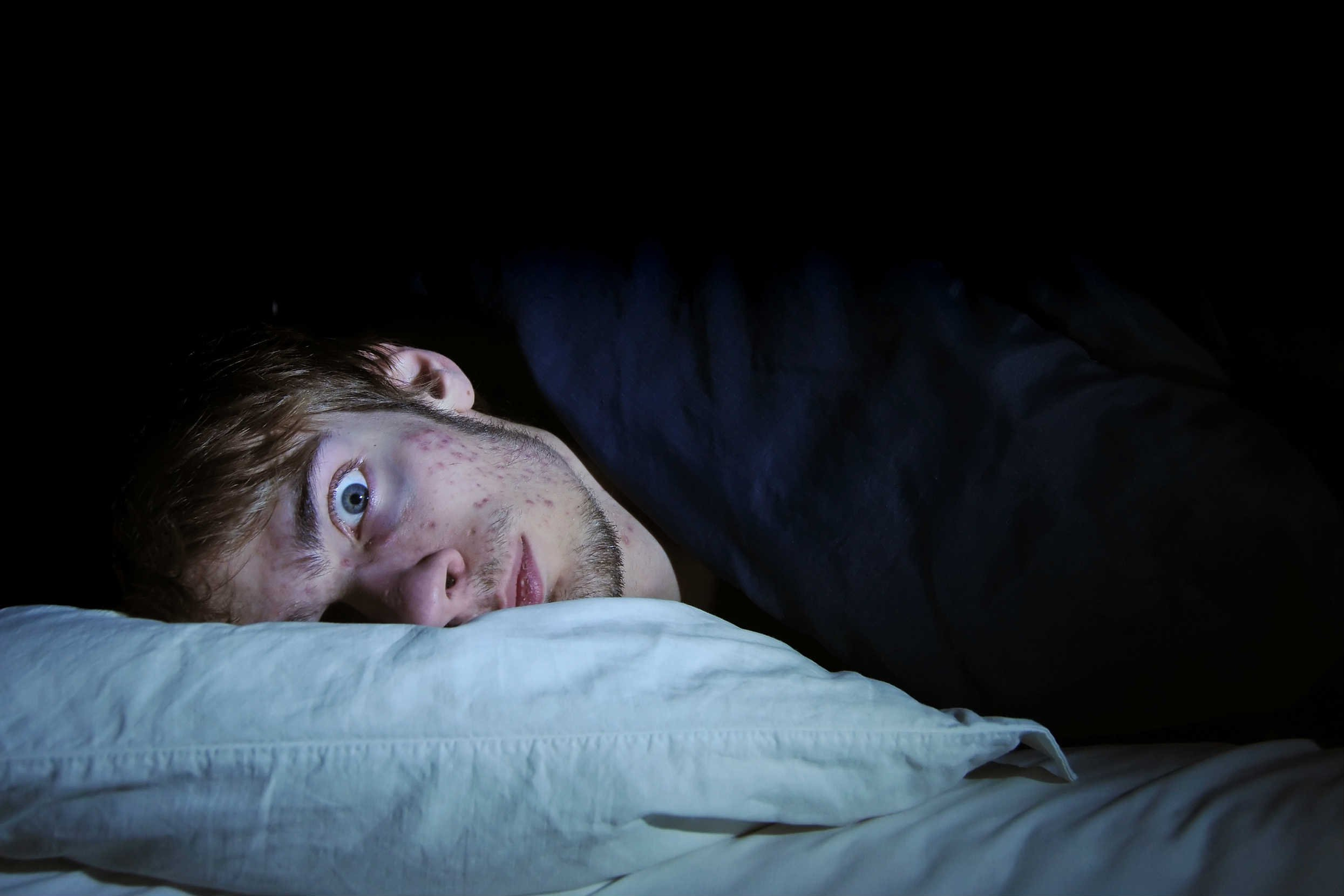
Judging from media reports and what I see online, the United States seems to be suffering from mass anxiety – so much so that The Global Statistics calls it a “national epidemic.” The page quotes several current statistics indicating just how widespread anxiety is in our society:
In 2024, 43% of Americans feel more anxious than the previous year. (American Psychiatric Association [APA])
Prevalence of anxiety disorder in adults: 19.1% (National Institute of Mental Health [NIMH])
Prevalence of anxiety disorder in adults at some point in their lives: 31.1% (NIMH)
Prevalence of anxiety disorders in adolescents (13-18 years old): 31.9% (NIMH). Among adolescent girls, it is 38.0%.
Adults anxious about: (all APA)
Current events: 70%
The economy: 77%
Gun violence: 69%
In this post, I would like to look at some possible causes, and discuss some possible solutions for the problem on a societal level. I am not a mental health professional, so I will not presume to address this on a personal level.
If you or a loved one is suffering from anxiety or depression, please call 988 for help. This line is not exclusively for suicide prevention.
Government
In a letter to George Wythe in April 1776, John Adams wrote:
Fear is the foundation of most governments; but it is so sordid and brutal a passion, and renders men in whose breasts it predominates so stupid and miserable, that Americans will not be likely to approve of any political institution which is founded on it.
Ten years ago, John Stossel, writing for Reason Magazine, wrote, “I fear fear itself because when we are afraid, we willingly give away our freedoms.” He cites several recent examples of ways government programs were expanded to address fears. He added, “Government thrives on our fears. When we’re scared, politicians are always there, promising to protect us if we just give them more money and power.”
Government exploiting fear, then, is nothing new; but in the past, government usually reacted to existing fears. Today, governments work to induce fear in the public. A few examples:
As I wrote in last week’s post, I have no argument with a deportation policy for illegal immigrants, especially those with criminal records; but the indiscriminate deportation of immigrants, including legal ones, appears to foster a fear of the foreigner (xenophobia) among the President’s supporters. Melissa Goldin, reporting for the Associated Press, cites a “deep disconnect” between rhetoric and reality:
There has been an increase of arrests by U.S. Immigration and Customs Enforcement since Trump began his second term, with reports of raids across the country. Yet the majority of people currently detained by ICE have no criminal convictions. Of those who do, relatively few have been convicted of high-level crimes — a stark contrast to the chilling nightmare Trump describes to support his border security agenda.
One chilling report of detaining legal aliens appeared on the PBS News Hour March 28, 2025. It’s not just from the southern border, either. One of them was a Canadian who was arrested for trying to renew her visa application. She describes her experience:
I was detained on March 3. I was in detention for a total of 12 days before they released me. Everything in that place is meant to break you, from being put in cells that are absolutely freezing cold with no blankets the first 48 hours. I slept on the mat on concrete with no blankets, no pillows.
They gave me this aluminum foil thing that you wrap around your body like a dead body.
While she was not deported, this is an obviously unconstitutional violation of her human rights. ICE denies deporting any citizens, but news reports have verified that some have been deported.
The President’s vacillation about tariffs appears designed to stoke fear in his power. Uncertainty about higher tariffs has already stirred fear among consumers, especially those with lower-incomes. While the economic data do not show serious negative impacts across the economy, it is forcing many families and seniors to make tough decisions about spending priorities. One Libertarian accurately noted that tariffs should be called “import taxes,” since it is the consumer who ends up paying them.
The President’s recent takeover of the Metropolitan Police in the District of Columbia, despite a Department of Justice finding that violent crime there was at a 30-year low, shows just how effective fear is as a political tool.
It is clear that the U.S. Government is trying to induce fear, both within the immigrant community and to generalize fear of immigrants among our residents. The observations of John Adams and John Stossel show that fear has been exploited for many years. Two other egregious examples of government profiting off fear was enacting the USA Patriot Act in the wake of 9/11 during President George W. Bush’s Presidency, and Presidents Trump and Biden using COVID-19 to further restrict American freedoms. The latter has had a lasting impact on the social growth of children of school age between 2019 and 2023.
Other sources of fear
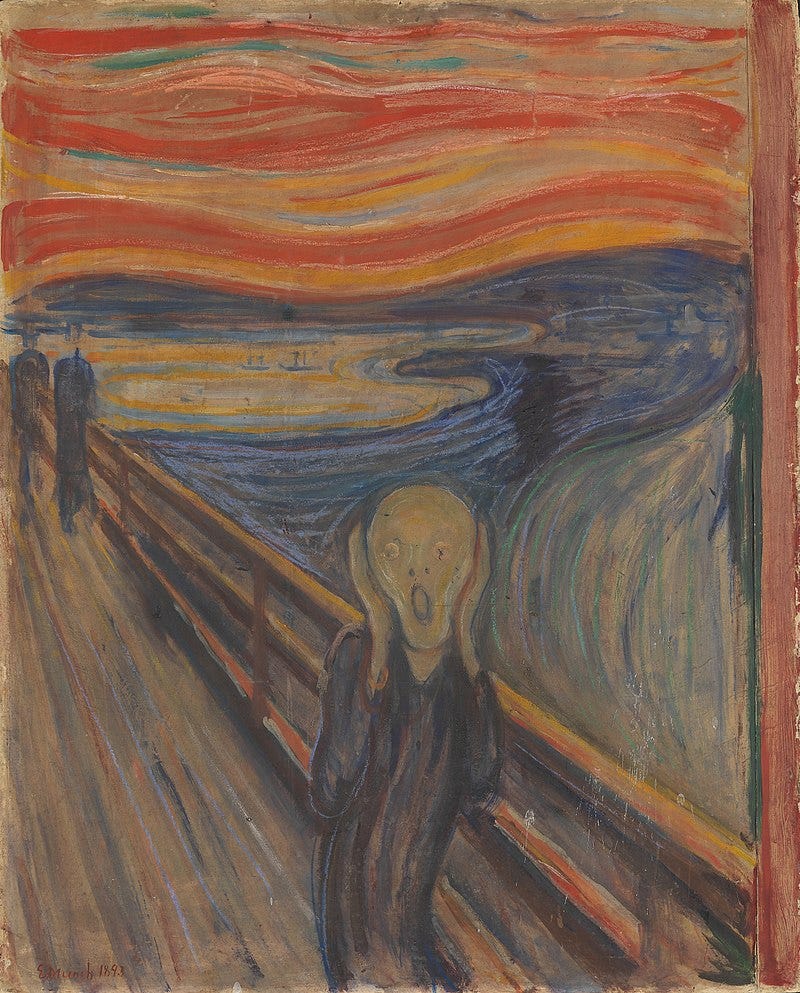
Parents afraid of the world around them have substantially curtailed their children’s freedom to explore their world on their own, which results in uncreative, anxiety-ridden kids. Electronic devices aggravate this anxiety when they use them even to relate to each other. Policies restricting cell phone use during the school day may help a little, though they are too new to have proper studies to evaluate them.
I suggest (and Eliana’s Reading Corner agrees) that the heavily dystopian content of our culture, including fantasy, aggravates fear in all of us.
Finally, we hear about anxiety and other mental disorders reflecting a lack of faith. That can be true, but isn’t necessarily. Scientific data shows that the relationship between mental illness and faith is actually quite complex, as this site points out. In my experience, faith has been an effective antidote for fear.
My theory
Most of our reactions to stressful situations are wired into us – the “fight or flight” response that has been with us for tens of millennia before civilization was even thought of. We will never completely eradicate this reflex, but we can reflect on why anxiety seems so dominant today. I suggest the following factors are at play. Each of them could be addressed by an appropriate institution in our society:
Years of alarmism about children have made them less resilient than they should be, leading parents to ensure children are highly supervised at all times. This resilience is so low that reliable reports show that three-quarters of Gen-Z adults have been accompanied by their parents to job interviews!
In the last fifty years, we have separated ourselves from our communities. Attendance at religious services and participation in community outreach has dropped precipitously in that time. Millions of Americans have no personal friends other than their spouses. In addition, we have tried to delegate to government functions that we once participated in as part of our communities, such as watching each other’s children after school, helping people in need, participating in sports organizations like softball and bowling leagues; and creating small community projects through service clubs like Scouting, Rotary, Jaycees, and Optimist Clubs. 1
We must recognize when politicians use fear as a weapon, and take steps to counteract its effects. When we hear something scary online, we can fact-check it simply by entering search criteria in Snopes or PolitiFact. 2 The truth might not be as bad as we think. We should also insist that others do the same.
Conclusion on a hopeful note
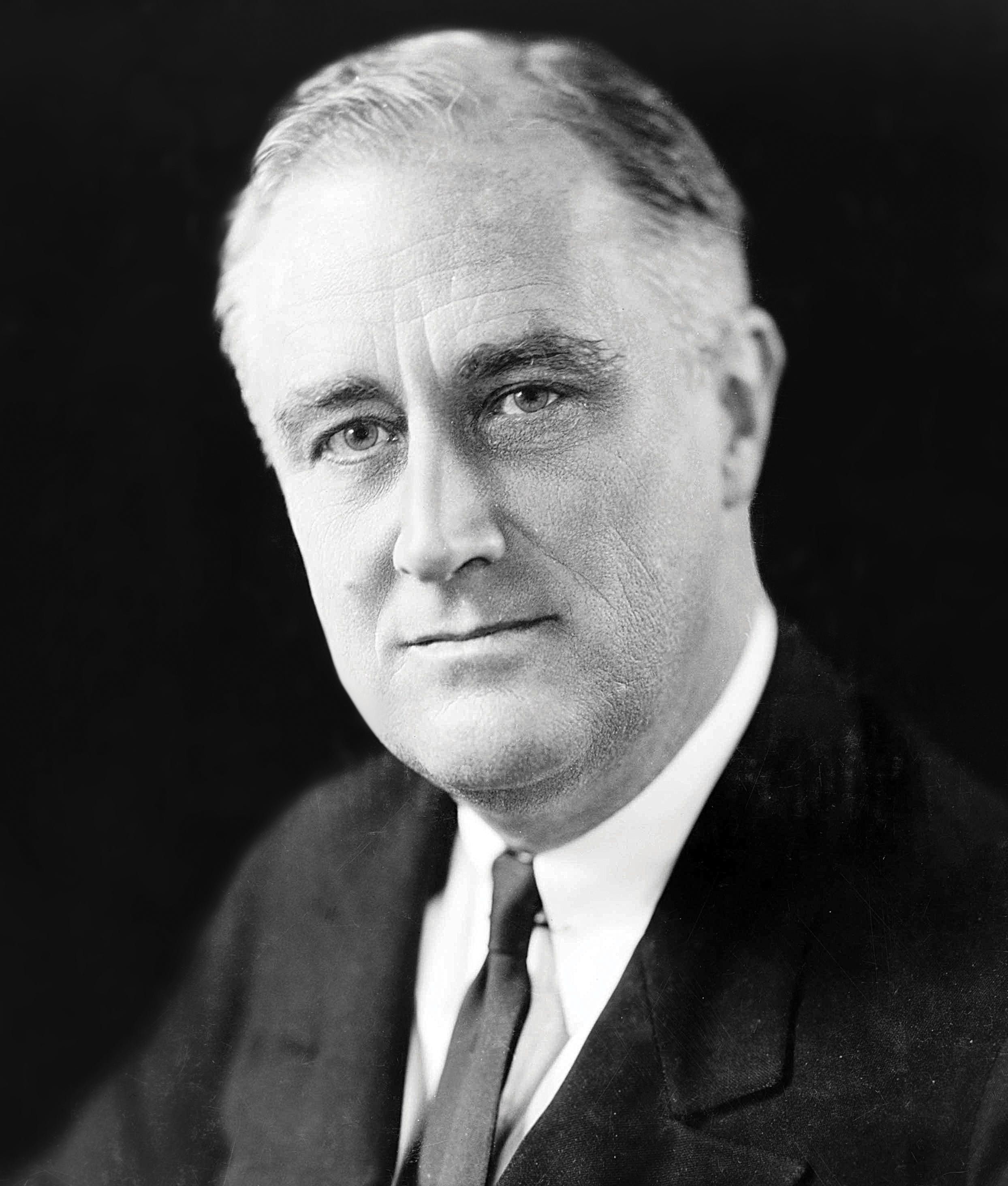
As a Libertarian, I never thought of Franklin D. Roosevelt as one of my favorite Presidents, but the opening words of his First Inaugural Address in 1933 brought hope to a generation battered by the Great Depression. The words are timeless, and should bring us hope as well:
I am certain that my fellow Americans expect that on my induction into the Presidency I will address them with a candor and a decision which the present situation of our Nation impels. This is preeminently the time to speak the truth, the whole truth, frankly and boldly. Nor need we shrink from honestly facing conditions in our country today. This great Nation will endure as it has endured, will revive and will prosper. So, first of all, let me assert my firm belief that the only thing we have to fear is fear itself--nameless, unreasoning, unjustified terror which paralyzes needed efforts to convert retreat into advance. In every dark hour of our national life a leadership of frankness and vigor has met with that understanding and support of the people themselves which is essential to victory. I am convinced that you will again give that support to leadership in these critical days.
If we seek and support frank and vigorous leaders, their leadership will inspire us to restore our self-confidence and enable us to look at the policies that can move us forward as a free, prosperous, and compassionate society.
Next week: something different
Next week, I will give the first review of fiction I have enjoyed, written by relatively unknown contemporary authors mostly from Ohio. I plan to publish these on the first Tuesday of each month.
Faithful Citizen with Harold Thomas consists of the musings of a mainline Protestant, libertarian Boomer who tries to keep up with the news while remaining true to his faith and the principles of the American Founders. Harold is an author and retired business analyst with degrees in political science and foreign service living in Columbus, Ohio.
What are your thoughts? Share your comments with us. Likes and restacks are also greatly appreciated!
Two good books document how this happened, one of them very old but still illuminating: Vance Packard, A Nation of Strangers (1972) and Robert D. Putnam, Bowling Alone (2000, revised and updated 2020).
In PolitiFact, click on the magnifying glass beside MENU in the upper left of the window. A line will pop up below it to type in your search criteria.
This certainly speaks to my condition and to almost everyone I know.
I really enjoyed reading this article, Harold.